





Space & Astronomy
September 29, 2026


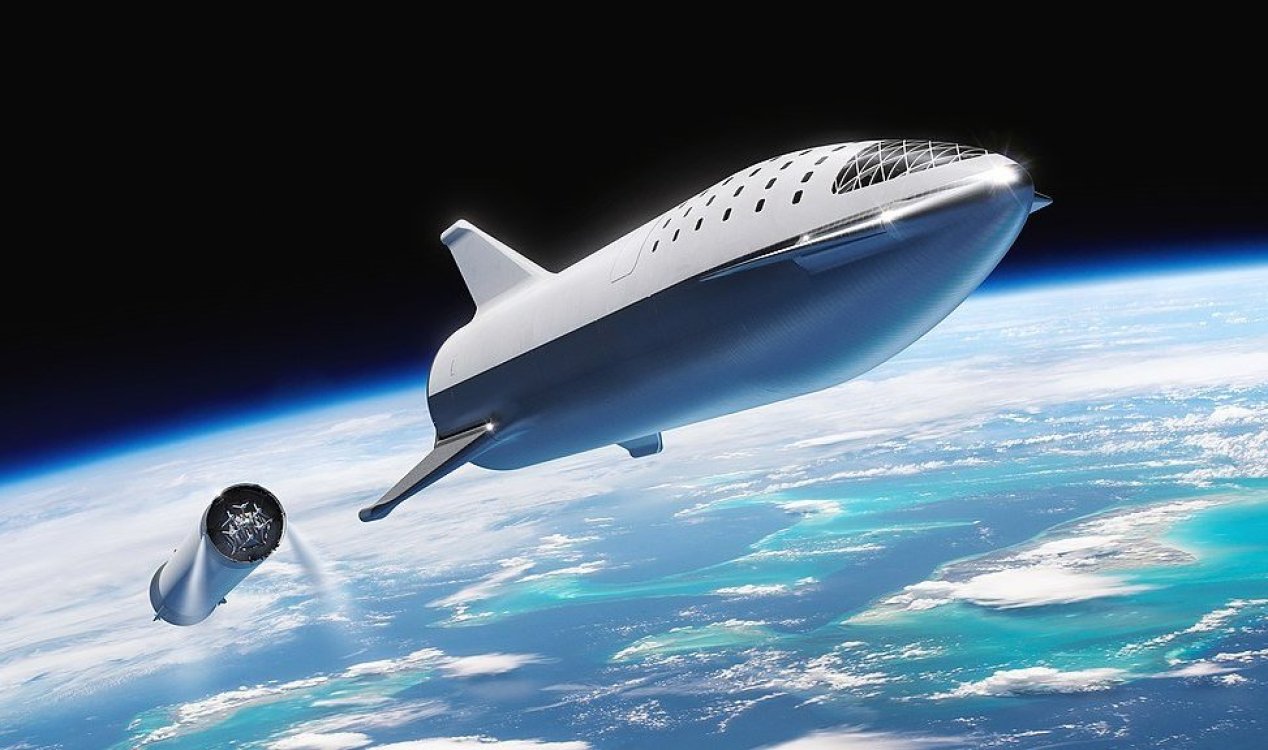
Image Credit: SpaceX
The futuristic vehicle, which when teamed with its booster forms the largest and most powerful rocket ever built, has had some rocky launches over the last few years, but each one has provided critical information enabling engineers to continue to refine and improve its design.
What made this test different from those that came before is that, for the first time, Starship reached Earth's orbit - a major milestone after years of suborbital test flights.
"This is an important milestone for SpaceX, with Starship successfully reaching orbit, and at the first attempt," said astrophysicist Martin Barstow of the University of Leicester.
"[It] marks the beginning of the transition from the testing and development phase to becoming a working vehicle able to deliver the large payloads needed to return to the Moon."
Starship will eventually replace the other vehicles used by SpaceX and will be fully reusable, theoretically making space flight cheaper than ever despite its enormous size making it rather too large for many routine missions.
Elon Musk's ultimate goal is to not only send humans to Mars but to build a city there, effectively spreading human civilization onto another world.
For now, though, getting Starship into orbit is a major achievement in of itself.
Source: The Guardian
SpaceX celebrates as Starship reaches Earth's orbit for the first time
By T.K. RandallSeptember 29, 2026
Image Credit: SpaceX
The latest test launch achieved a major milestone in the quest to build a rocket capable of carrying humans to Mars.
There was much to celebrate at SpaceX yesterday as Starship, sitting atop a super heavy booster, thundered into the heavens on its latest test launch.The futuristic vehicle, which when teamed with its booster forms the largest and most powerful rocket ever built, has had some rocky launches over the last few years, but each one has provided critical information enabling engineers to continue to refine and improve its design.
What made this test different from those that came before is that, for the first time, Starship reached Earth's orbit - a major milestone after years of suborbital test flights.
"This is an important milestone for SpaceX, with Starship successfully reaching orbit, and at the first attempt," said astrophysicist Martin Barstow of the University of Leicester.
Starship will eventually replace the other vehicles used by SpaceX and will be fully reusable, theoretically making space flight cheaper than ever despite its enormous size making it rather too large for many routine missions.
Elon Musk's ultimate goal is to not only send humans to Mars but to build a city there, effectively spreading human civilization onto another world.
For now, though, getting Starship into orbit is a major achievement in of itself.
Source: The Guardian
Similar stories based on this topic:



The Unexplained Mysteries
Book of Weird News
AVAILABLE NOW
Take a walk on the weird side with this compilation of some of the weirdest stories ever to grace the pages of a newspaper.
Click here to learn more

Support us on Patreon
BONUS CONTENTFor less than the cost of a cup of coffee, you can gain access to a wide range of exclusive perks including our popular 'Lost Ghost Stories' series.
Click here to learn more

1 week
2 weeks
3 weeks
1 month


This week
This month
All time
 |
1. | Electronic Voice Phenomenon |
|
2. | Pareidolia |
|
3. | Orb |
 |
4. | Loch Ness Monster |
|
5. | Area 51 |
|
6. | Yeti |
|
7. | Ghost |
| - | 8. | Spirit Photography (Classic) |
|
9. | Storm Area 51 |
|
10. | Bigfoot |


Top | Home | Forum
News | Columns | Encyclopedia


UM 11.3 Unexplained-Mysteries.com (c) 2001-2026
Terms | Privacy Policy | Cookies | Contact
News | Columns | Encyclopedia
UM 11.3 Unexplained-Mysteries.com (c) 2001-2026
Terms | Privacy Policy | Cookies | Contact